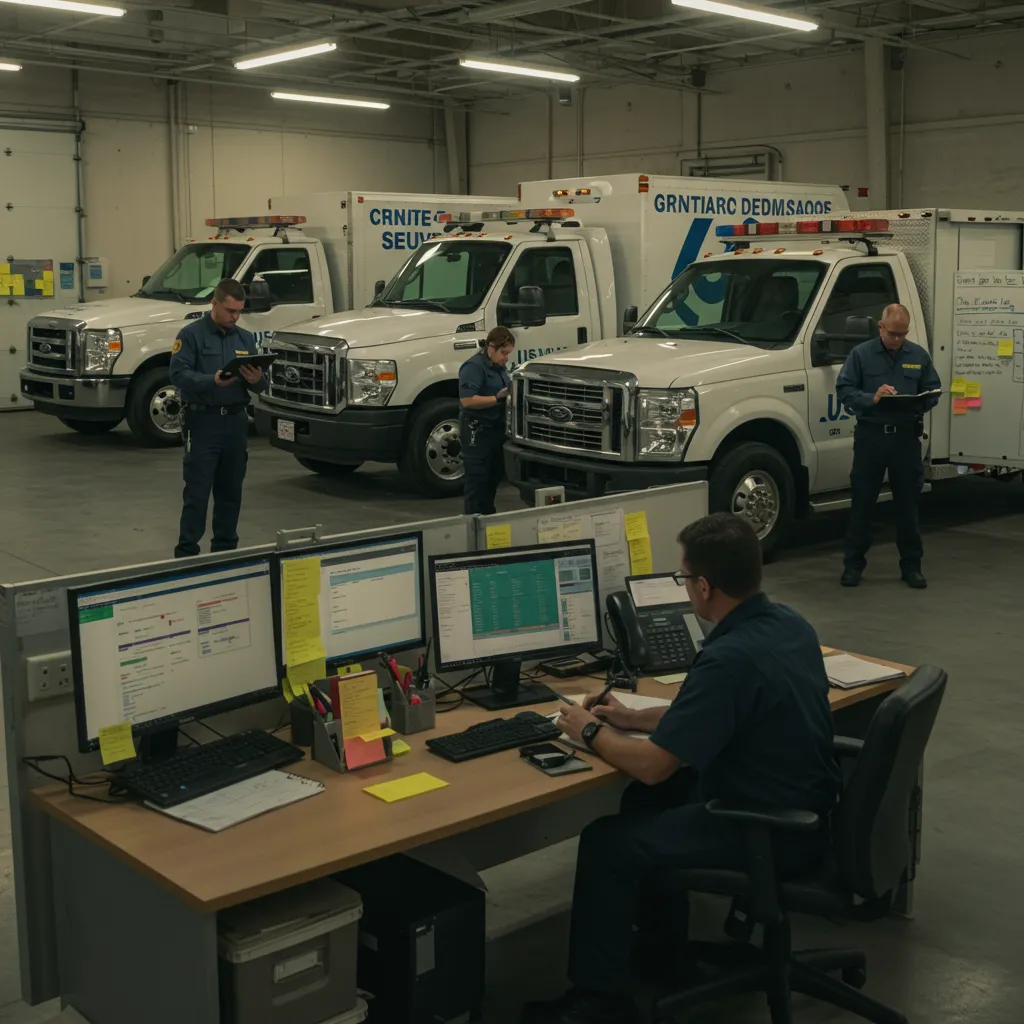
Scaling a 5-Truck Fleet in Fort Worth: The Automation Playbook
Five trucks. Five techs. Five sets of scheduling headaches, dispatch decisions, and customer communication gaps.
If you're running a 5-truck fleet in Fort Worth and your intake system is still built on "whoever's in the office answers the phone," you don't have a 5-truck operation. You have a 1-person operation that happens to have 4 other trucks sitting in the lot.
Scaling past 5 trucks requires infrastructure that doesn't depend on any single person. Here's what that infrastructure looks like.
THE 5-TRUCK INFLECTION POINT
Every multi-truck HVAC operation in the DFW metro hits a specific inflection point around 4–6 trucks where the owner's original systems stop working.
When you were running 1–2 trucks, you could manage intake personally. You knew every customer. You dispatched from memory. You followed up yourself. That worked — because the volume was manageable.
At 5 trucks, the volume isn't manageable by a single person anymore. You're fielding 50–80 calls per week. You have 5 technicians in 5 different locations who all need dispatch support simultaneously. You have estimates pending, jobs in progress, completed jobs needing invoicing, and new leads all competing for attention at the same time.
The operators who scale past this point are the ones who build systems before they need them — not after the chaos sets in.
THE FORT WORTH MARKET AT 5 TRUCKS
Fort Worth and its surrounding communities (Burleson, Crowley, Benbrook, Keller, Hurst) represent a substantial service territory with distinctly different customer profiles across different zones.
The west side has older housing stock with aging systems ripe for replacement. North Fort Worth and Keller skew toward newer construction with higher-income homeowners who expect fast, professional service. The inner city has high rental density with property management relationships that can generate consistent maintenance revenue.
A 5-truck fleet that can intelligently serve all of these zones — routing the right tech to the right job, capturing emergency calls from any area, and maintaining consistent communication across all customer types — needs automation to make that work. A human dispatcher can't hold all of that in their head reliably.
THE AUTOMATION PLAYBOOK FOR 5-TRUCK OPERATIONS
System 1: Intelligent Lead Routing Every inbound inquiry is automatically tagged by zone, urgency, and job type. Emergency calls in Keller go to the nearest available tech. Replacement estimates in the historic district go to your most experienced system specialist. Maintenance calls get scheduled into open slots without dispatcher involvement.
System 2: Tech Communication Hub Your techs get job details, customer history, and routing information automatically before they arrive. No more "call me when you're done so I can tell you where to go next." The system dispatches the next job based on completion status, location, and priority.
System 3: Customer Lifecycle Automation Every customer relationship is managed automatically from first contact through annual follow-up. Appointment reminders. Pre-arrival messages. Post-job review requests. Seasonal maintenance check-ins. All of it happens without a human triggering each action.
System 4: Revenue Dashboard Real-time visibility into fleet performance: jobs completed per truck, revenue per tech, conversion rate by lead source, review generation rate. You can see the health of your entire operation from your phone at any moment.
System 5: Overflow and After-Hours Capture When all 5 trucks are booked and calls keep coming in — which happens every Texas summer — the system captures those leads, puts them in a queue, and books them for the next available slot automatically. Not a single lead falls through.
FROM 5 TRUCKS TO 10: HOW SYSTEMS MAKE IT POSSIBLE
The operators running 10-truck fleets in the Fort Worth metro didn't get there by hiring proportionally more office staff. They got there by building intake and dispatch systems that scale horizontally — where adding trucks doesn't add proportional administrative overhead.
The infrastructure you build at 5 trucks is the same infrastructure that runs at 10. You're not rebuilding the system every time you grow. You're just adding capacity to a machine that already works.
BUILD YOUR FLEET AUTOMATION SYSTEM
📅 Book a scaling strategy call: https://www.thrive-bridge.com/calendar
We build the automation infrastructure for multi-truck DFW operations that are ready to scale past the 5-truck ceiling — and keep scaling.
BrownBag Consultants | Business Automation for DFW Contractors | thrive-bridge.com